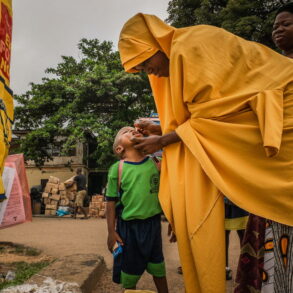



Medical experts, researchers, and policymakers have called on Nigerians to embrace cancer prevention vaccines, highlighting their potential to significantly reduce deaths from liver and cervical cancers.
The call was made during the Policy4Cancer Designathon, a programme hosted in Abuja by the Cancer Control Centre for Research on Implementation Science and Equity.
Speaking at the event, Professor Juliet Iwelunmor, a principal investigator and professor of medicine at Washington University, stressed the importance of proactive vaccination efforts.
“Our goal is to prevent needless cancer-related deaths—especially from liver and cervical cancers—through available vaccines,” Iwelunmor told PUNCH Healthwise. “If we can increase uptake of these vaccines, we can drastically reduce cancer rates in Nigeria.”
She explained that the designathon aimed to bridge the gap between research and policy by involving community members, students, and researchers in brainstorming actionable solutions.
“We wanted everyday people—not just researchers—to contribute ideas on how to translate scientific findings into policies,” she said. “Six teams presented proposals, including policy briefs and community-based campaigns, all aimed at saving lives. It’s heartbreaking to know that 22 Nigerian women die daily from cervical cancer—something that is largely preventable.”
Iwelunmor noted that following the competition, top ideas will be presented to policymakers for potential inclusion in Nigeria’s updated cancer control policies.
“We’re urging those revising national policies to listen to these community-informed ideas,” she added. “It’s time we ensured research reaches the people who need it most.”
Discussing the criteria for selecting the winning team, Iwelunmor said innovation and real-life relevance were key.
“We were looking for original, practical ideas. My personal motivation came from losing someone to cervical cancer—I wasn’t originally a cancer researcher, but that loss drove me to make a difference.”
Dr. Folahanmi Akinsolu, a research fellow at the Nigerian Institute of Medical Research and associate professor at Leeds City University, emphasized the importance of collaboration.
“Whether it’s cervical or liver cancer, prevention is possible,” he said. “We don’t need to leave it all to the government. University researchers and various professionals contributed, and the innovations presented were very impressive.”
He added that sustainability is a critical focus, given funding challenges in Nigeria.
“We need long-term, low-cost strategies. Encouragingly, awareness has grown, and the introduction of HPV vaccination in 2023 and its rollout in 2024 has helped. At the grassroots level, mothers are more informed—many know their newborns should receive vaccines within 24 hours of birth. We’re making progress.”
However, he acknowledged that vaccine hesitancy remains a significant barrier.
“We must continue to educate the public. The government’s active involvement shows this works—now it’s our job to spread the word.”
Out of six competing teams, CANREACT emerged as the winner, securing the N1 million prize. Finalists also included Team Trident and Team Echo.
The CANREACT team comprised pharmacist and Chronic Disease Mate for Africa founder Esiosa Iyagbaye; Eunice Ayeni, a Public Health Epidemiology MSc student at the University of Lagos; Stephanie Ihensekhien, a pharmacist from the University of Benin; and Lawal Abiola, also a pharmacist.
Speaking with PUNCH Healthwise, Iyagbaye explained that CANREACT stands for Cancer, Research, and Action, and reflects both the project’s name and its purpose.
“Our project was inspired by findings from Egor Local Government Area in Edo State, which has one of the highest cervical cancer burdens in the region,” she said. “Despite having institutions like the University of Benin and a teaching hospital, Egor still faces alarming cancer rates.”
She said their approach prioritizes community involvement, noting that many policies fail due to poor implementation at the grassroots level.
“Policymakers are often too busy, and researchers may lack time to engage with communities. CANREACT brings all stakeholders together to ensure that even small policy changes have a meaningful impact,” she added.
“Our focus remains on tackling chronic and non-communicable diseases. Public health solutions must be inclusive, practical, and rooted in the experiences of the communities they serve.”